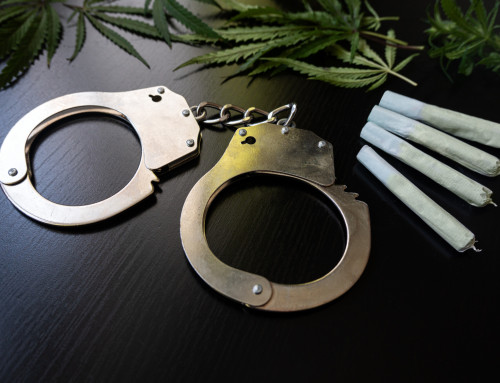


Recreational Cannabis Is Legal in Illinois, But Possession Charges Have Not Disappeared
What the Cannabis Regulation and Tax Act Actually Allows
Since January 1, 2020, Illinois has legalized recreational use of cannabis for adults 21 and older under the Cannabis Regulation and Tax Act. However, legalization does not mean all possession is legal or free from criminal penalties.
Many Illinois residents mistakenly believe they cannot be charged with marijuana possession anymore. Whether you call it marijuana, cannabis, weed, or mary jane, the law sets specific limits on how much you can legally possess. Exceeding those limits can still lead to misdemeanor or felony charges with serious consequences.
Legal Possession Limits
Illinois residents age 21 and over may legally possess:
- Up to 30 grams of cannabis flower
- Up to 5 grams of cannabis concentrate
- Up to 500 milligrams of THC in cannabis-infused products
Non-residents are allowed half these amounts. Possession beyond these limits remains illegal and subject to prosecution.
Understanding THC Content and Cannabis Products
The cannabis sativa plant contains over 483 known compounds, including the main cannabinoids THC (delta-9 tetrahydrocannabinol) and CBD (cannabidiol). THC is responsible for the psychoactive effect associated with marijuana use, altering mood and cognition, while CBD does not produce this effect.
The THC content determines the potency of cannabis products. Cannabis flower typically contains 3% to 20% THC, while concentrates like hash oil and cannabis oil can contain more than 60% THC. Higher potency products mean smaller amounts can push you over legal limits faster.
Cannabis can be consumed in several ways, including smoking cannabis (joints, pipes, bongs), vaporizing, edibles, tinctures, and pill form. Each method affects how quickly THC enters the bloodstream. Cannabis smoking allows rapid absorption, while edibles take longer to produce effects because they must be digested first. Understanding these distinctions matters because law enforcement and prosecutors consider both form and quantity when evaluating charges.
Bottom Line: Legal does not mean unlimited. Know the limits. Exceeding them is still a crime.
When Legal Possession Becomes a Criminal Charge
Exceeding Possession Limits
Possession thresholds determine whether you face a civil violation, misdemeanor, or felony:
30 to 100 grams of flower: Class A misdemeanor, up to 1 year in jail and $2,500 fine
100 to 500 grams: Class 4 felony, 1 to 3 years in prison and fines up to $25,000
500 grams to 2,000 grams: Class 3 felony, 2 to 5 years in prison
Over 2,000 grams: Class 2 felony or higher with escalating prison time
Penalties increase significantly with larger quantities. Possession of high doses not only leads to more severe legal consequences but may also raise concerns about distribution. Knowing these thresholds is critical because charges escalate quickly once legal limits are surpassed.
Possession With Intent to Deliver
Illinois law distinguishes simple possession from possession with intent to deliver, which carries far more severe penalties. Even possessing amounts within legal limits can become a felony if prosecutors allege intent to distribute.
Prosecutors look at factors like packaging, scales, large amounts of cash, and multiple phones to argue intent to deliver. Possession alongside other drugs or other substances may also increase the severity of charges. A knowledgeable defense attorney can challenge these claims and the evidence supporting them.
Location-Based Restrictions
Possession of cannabis within 1,000 feet of a school, public park, or government building is prohibited and can lead to enhanced charges regardless of the amount. These location-based restrictions remain in effect despite legalization.
Possession by Individuals Under 21
Persons under 21 cannot legally possess recreational cannabis. If caught, they face criminal charges that may include fines, community service, or juvenile detention.
Using cannabis during adolescence carries an increased risk of health problems. Research indicates that marijuana use before age 25, when the brain is still developing, may affect cognitive development, problem solving abilities, and memory. Cannabis Use Disorder (CUD) affects approximately 1 in 10 adult users but rises to about 1 in 6 among those who start using cannabis during adolescence. These concerns are part of why Illinois law treats underage possession seriously.
Bottom Line: Age, amount, location, and intent all determine whether possession is legal or criminal.
Why Illinois Law Still Takes Marijuana Seriously Despite Legalization
Health Concerns Behind the Legal Limits
Although recreational use is legal, Illinois maintains strict possession limits and criminal penalties partly due to ongoing concerns about health effects. Scientific research, including systematic reviews and observational studies, has examined both the short term and long term effects of cannabis use.
Short-term effects of marijuana use can include increased heart rate, dry mouth, increased appetite, impaired attention and memory, and a higher risk of anxiety and panic attacks. These effects are relevant to impaired driving charges.
Long-term effects associated with heavy cannabis use include an increased risk of developing mental health issues, including depression and anxiety disorders. Some studies suggest that deficits in memory and executive functions may persist even after periods of abstinence, though more research is needed to fully understand these effects.
Heavy marijuana use has also been linked to cannabinoid hyperemesis syndrome, a condition marked by recurrent vomiting, abdominal pain, and nausea. High doses can cause vomiting caused by cannabis use and other side effects that may require medical attention.
Cannabis smoke contains many harmful chemicals, and chronic smoking cannabis may lead to respiratory issues similar to those caused by tobacco smoke. These health problems inform why legislators maintain strict regulations even as recreational use is permitted.
The Research Landscape
Organizations like the National Cancer Institute, National Institute on Drug Abuse, and other research bodies within complementary and integrative health continue to study cannabis effects. While high quality studies remain limited due to cannabis’s federal classification, existing research supports maintaining legal limits while allowing regulated adult use.
The National Center for Complementary and Integrative Health emphasizes that while some evidence supports medical uses of marijuana, the long term effects of regular use require more research. This ongoing scientific investigation shapes how Illinois balances legalization with regulation.
Bottom Line: Legalization does not mean harmless. The law’s limits reflect both individual rights and public health considerations.
Constructive Possession: You Do Not Have to Be Holding It
Cannabis Found in Your Vehicle, Home, or Belongings
 You do not need to be physically holding cannabis to be charged with possession. Constructive possession applies when cannabis is found in places you control, such as your car, home, or personal belongings.
Cannabis discovered in a glove compartment, center console, or shared apartment can result in charges even if you were not personally holding it. Evidence of cannabis use, such as odor, ash, or paraphernalia, can also support constructive possession charges.
Multiple People Can Be Charged for the Same Cannabis
Multiple individuals can face possession charges for the same cannabis if each has access to or control over it. Roommates sharing an apartment or passengers in a vehicle where cannabis is found can all be charged.
This legal principle underscores the importance of caution around cannabis in shared spaces. If cannabis is found in a car you are driving or a residence you share, you may face charges regardless of who actually owned it.
Vehicle Searches and Cannabis After the 2024 Illinois Supreme Court Rulings
People v. Redmond: Burnt Cannabis Odor Alone Is Not Enough
In People v. Redmond (2024 IL 129201), the Illinois Supreme Court ruled that the odor of burnt cannabis alone does not provide probable cause for a warrantless vehicle search. Since recreational cannabis use is legal in Illinois, the smell of burnt cannabis by itself cannot justify a search.
This decision limits police authority during traffic stops when only burnt cannabis odor is present.
People v. Molina: Raw Cannabis Odor Still Justifies a Search
In People v. Molina (2024 IL 129237), the Court ruled that the odor of raw cannabis can still establish probable cause for a search. Illinois law requires cannabis in vehicles to be stored in sealed, odor-proof containers (625 ILCS 5/11-502.15). The smell of raw cannabis suggests this storage requirement is being violated.
What This Means for DUI and Drug Stops in Cook County
Police can no longer rely solely on burnt cannabis odor to justify searches. But raw cannabis odor remains valid grounds for a search.
If you are stopped and police claim to smell raw cannabis, they may search your vehicle. If they only smell burnt cannabis, they need additional justification. Understanding this distinction matters if you are facing charges stemming from a vehicle search.
Bottom Line: Burnt cannabis smell alone is not probable cause. Raw cannabis smell still is. Know the difference.
Cannabis and Impaired Driving
Why Marijuana DUI Remains a Serious Charge
Even though recreational use is legal, driving under the influence of cannabis remains illegal. The short term effects of marijuana use, including impaired attention, slowed reaction time, and impaired coordination, directly affect driving ability.
Illinois law prohibits driving with THC in your system above certain thresholds. Unlike alcohol, which has established blood alcohol limits, cannabis impairment is harder to measure. This can lead to contested charges where the prosecution relies on officer observations and field sobriety tests.
Combining cannabis with alcohol or prescription drugs increases impairment and the likelihood of a DUI charge. Drug abuse involving multiple substances is treated particularly seriously by prosecutors.
Medical Marijuana and the Law
Medical Cannabis for Certain Medical Conditions
Illinois has a medical marijuana program for patients with qualifying medical conditions. Medical cannabis may be authorized to treat nausea from chemotherapy, neuropathic pain, chronic pain, multiple sclerosis, epilepsy (including Dravet syndrome and Lennox-Gastaut syndrome), and other serious health conditions.
Evidence supports the use of cannabis or its derivatives in the treatment of chemotherapy-induced nausea and vomiting, neuropathic pain, and multiple sclerosis. Lower levels of evidence support its use for conditions like AIDS wasting syndrome, rheumatoid arthritis, and glaucoma. Research in integrative health continues to examine cannabis’s role in medicine.
Medical marijuana patients have different possession limits and protections than recreational users. However, medical patients can still face charges for exceeding their limits, possessing cannabis in prohibited locations, or driving under the influence.
Federal Law Still Classifies Cannabis as Illegal
Despite state legalization, cannabis remains a Schedule I controlled substance under federal law. The U.S. Food and Drug Administration has not approved the cannabis plant for any medical use, though it has approved certain cannabinoid-based medications for specific conditions.
Transporting cannabis across state lines, even between states where it is legal, can result in federal trafficking charges with severe penalties. The tension between state and federal law creates ongoing legal risk.
Penalties for Marijuana Possession in Illinois
Civil Violations vs. Criminal Charges
Possession under certain low thresholds may be treated as a civil violation with fines. But most possession cases, especially those exceeding legal limits, are criminal offenses carrying jail time and fines.
Federal Charges for Interstate Trafficking
Transporting cannabis across state lines triggers federal jurisdiction. Federal trafficking charges carry mandatory minimum sentences and severe penalties regardless of state legalization.
In the United States, 24 states and the District of Columbia have legalized recreational cannabis, but it remains illegal at the federal level. Internationally, Uruguay and Canada are the only countries that have fully legalized recreational cannabis nationwide.
How a Criminal Defense Attorney Challenges Marijuana Charges
Illegal Search and Seizure
Defense attorneys challenge evidence obtained through unlawful searches. Under the 2024 Illinois Supreme Court rulings, burnt cannabis odor alone no longer justifies a warrantless vehicle search. If police violated your Fourth Amendment rights, evidence may be suppressed.
Challenging Constructive Possession
If you did not know about the cannabis or did not have control over where it was found, your attorney can challenge constructive possession claims. Proximity alone does not prove possession.
Suppressing Statements
Statements made without proper Miranda warnings can be excluded from evidence. If police questioned you without advising you of your rights, those statements may be inadmissible.
Challenging Intent to Deliver
Prosecutors must prove intent to distribute beyond a reasonable doubt. Possession of a large quantity does not automatically prove intent. A defense attorney can challenge the evidence and arguments prosecutors use to elevate simple possession to a distribution charge.
Bottom Line: The facts of your stop, search, and arrest determine your defense options. Even serious charges can be challenged if your rights were violated.
Facing a Marijuana Charge in Chicago or Cook County?
Marijuana charges remain serious offenses in Illinois with significant legal and personal consequences. A conviction can affect employment, housing, professional licensing, and your future.
Purav Bhatt is a former Cook County prosecutor who understands how these cases are built and where the weaknesses are. That perspective drives every defense strategy.
If you are facing marijuana possession charges in Chicago or Cook County, contact The Law Office of Purav Bhatt, P.C. at 773-791-9682 to schedule a Defense Strategy Session.
We review the facts of your case, evaluate whether the search was lawful, and develop a defense strategy focused on protecting your rights and achieving the best possible outcome.
Originally published: April 5, 2014 | Updated: June 3, 2026